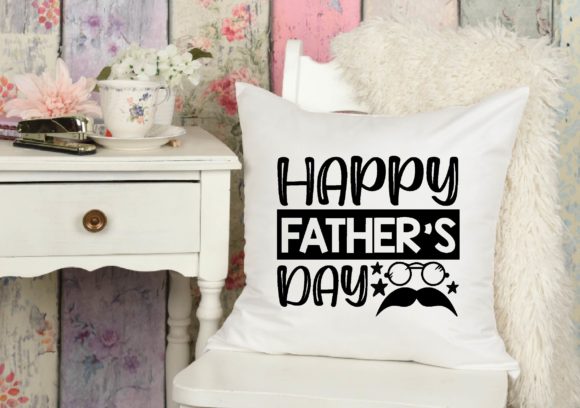
Happy Father’s Day Svg: A Designer's Review
As a designer who spends countless hours curating assets for my small shop and client projects, I approach every new file with a critical eye. When I first opened the Happy Father’s Day Svg, my immediate goal wasn't just to see if it looked good on a screen, but to visualize how it would translate into a tangible, high-quality finished product. This specific design falls squarely into the Crafts category as a versatile Graphics asset, promising compatibility with cutting machines like Cricut and Silhouette. However, for us in the embroidery world, the real question is whether this digital shape can withstand the rigors of thread, tension, and fabric texture.
First Impressions: Mood and Visual Personality
The initial visual impact of the Happy Father’s Day Svg is warm and inviting, which is exactly what we need for holiday merchandise. The layout feels balanced, avoiding the clutter that often plagues seasonal designs. As I examined the vector lines, I was thinking about how these shapes would behave once converted into a machine embroidery design. The bold lettering suggests it will hold up well against the grain of a sweatshirt or the weave of a tote bag. Unlike some intricate graphics that rely on tiny details that get lost in stitching, this design has a confident simplicity. It feels like a piece that could work beautifully as an embroidered patch or a direct stitch on a custom apparel item.
However, there is a crucial distinction to make here. While the file is marketed as an SVG for cutting, using it for embroidery requires careful digitization. If you are planning to use this as an applique design, the clean edges are a major plus. But if you intend to run it as a fill stitch, you must ensure the interior spaces are large enough to prevent puckering. The visual personality screams "family," making it suitable for men, women, kids, and babies alike, but the execution depends entirely on how you adapt the file for your specific hoop size and stabilizer choice.
Real-World Application: From Screen to Stitch
Let’s talk about a real scenario. Imagine you are preparing a boutique collection for Father’s Day, specifically focusing on personalized gifts. You decide to create a line of heavy-duty canvas tote bags and fleece sweatshirts. For the tote bag design, the Happy Father’s Day Svg offers a great silhouette. Because the text is likely bold, it would read clearly even from a distance, which is essential for items people carry around. I can picture this stitched in a vibrant orange or classic navy blue thread colors against a natural canvas background. The contrast would be striking, elevating the perceived value of the handmade product instantly.
Now, consider the sweatshirt embroidery. This is where things get tricky. Fleece is a textured fabric, and if the design includes tight curves or very small letters, the needle might struggle to follow the path accurately. In this case, I would recommend testing the design on scrap fabric first. You need to check the stitch density to ensure the threads don't sink too deeply into the pile of the fleece. If the Happy Father’s Day Svg features thin serifs or delicate decorative accents, they might need to be thickened during the digitizing process to maintain clarity. A running stitch outline might work better than a dense satin stitch for certain elements to allow the fabric to breathe.
This design also has strong potential for baby embroidery. Parents love matching family outfits, and a simplified version of this graphic on a onesie or a nursery pillow cover could be adorable. However, for baby clothes, safety and comfort are paramount. You cannot have loose threads or overly stiff areas. If you are using this for a commercial embroidery project targeting parents, ensure the backing stabilizer is tear-away or water-soluble so the final garment remains soft against a baby's skin.
Navigating Challenges: Where Caution is Key
While the Happy Father’s Day Svg is promising, there are specific situations where it requires extra caution. Small hoop sizes are the first red flag. If you are trying to fit the entire phrase onto a small cap or a pocket square, the lettering may become illegible after stitching. Embroidery files need space to expand; compressing a complex graphic into a tiny area often results in a muddy mess of thread. Always confirm your hoop size before committing to a sale.
Fabric texture is another variable. On dark fabric, you will need a toner or underlay to make the colors pop, which adds time and cost to your production. If you are selling these as Etsy listings, factor this into your pricing. Additionally, stretchy fabrics like jersey knit can distort the design if not stabilized correctly. The design might look perfect on the screen, but without the right stabilizer, the stitches could pucker or warp the garment. Layered garments, such as hoodies with zippers, also present challenges. Curved surfaces like caps require specialized digitizing techniques that a standard SVG file does not provide automatically.
Detailed corners and tiny lettering are the enemies of clear embroidery. If the Happy Father’s Day Svg includes fine details, test it in black and white mockups first to see if the contrast holds up. Sometimes, what looks sharp digitally becomes a blob of thread when stitched. Dense stitch areas can also cause issues with frequent washing. If you are creating kitchen towels or aprons that will go through the wash often, you want to avoid excessive stitch density that could trap dirt or cause the fabric to wear out prematurely.
Practical Notes for Designers and Makers
For any craft business owner or Etsy seller looking to incorporate this design, here are my practical notes. First, never skip the test run. Stitch the design on a scrap piece of the exact fabric you plan to use. Check the thread color contrast and review the stitch density. Does the design feel too heavy? Is the underlay sufficient?
Second, compare light and dark fabric backgrounds. The same design can look completely different depending on the base material. Use printable mockups to show customers how the finished product will look, but always manage expectations by showing real photos of your own work. Third, verify the licensing. Just because you bought the digital product doesn't mean you can sell the digital file itself. Most licenses allow you to sell the finished product, but you must confirm this before listing your items. Finally, remember that while this is a cutting file, adapting it for a machine embroidery design requires skill. Whether you are doing it yourself or hiring a digitizer, ensure the result honors the original intent of the Happy Father’s Day Svg while respecting the limitations of thread and fabric.
In conclusion, this graphic offers a solid foundation for holiday embroidery projects. With careful attention to stabilizer, stitch density, and fabric choice, it can become a standout piece in your collection. It bridges the gap between digital creativity and handmade craftsmanship, offering a reliable option for those looking to create memorable, professional-grade gifts for the fathers in their lives.